

Call to ask any question
+86 19591574998
WIT INDUSTRIES Services
Polyhydroxyalkanoates (PHA)
100% Bio-Based & Biodegradable Polyhydroxyalkanoates (PHA) – Sustainable Material for a Greener Future
WIT INDUSTRIES – Bulk Supplier & Exporter for Industrial Buyers Only
🌱 From Nature, By Nature, Back to Nature
Origin: PHA is naturally produced by halophilic bacteria (Halomonas spp.) using glucose or bio-waste in a fermentation process. This approach minimizes carbon emissions and fully supports a circular economy.
Production: PHA is synthesized without fossil fuels, through a closed-loop biotechnological process, ensuring minimal environmental impact during manufacturing.
Degradation: Once disposed of, PHA fully degrades in natural environments without the need for industrial composting. Unlike traditional plastics, PHA disappears without a trace.
Product Description
What is Polyhydroxyalkanoates (PHA)?
Polyhydroxyalkanoates (PHA) are a family of natural polyesters produced by microorganisms such as Halomonas spp. through the fermentation of renewable feedstocks like glucose or organic waste. As a 100% bio-based and fully biodegradable material, PHA stands at the forefront of sustainable plastics—delivering not just performance but also environmental responsibility.
Whether in marine, freshwater, or soil, PHA breaks down into CO₂ and water within a few months without leaving behind microplastics. It is an ideal solution for eco-conscious manufacturers across packaging, agriculture, textiles, consumer goods, and more.
Product properties
Key Advantages of Polyhydroxyalkanoates (PHA)
| Feature | Description |
|---|---|
| 🌿 100% Bio-Based | Derived from renewable sources like glucose or organic waste |
| 🌍 Biodegradable | Naturally degrades into CO₂ and water in various environments |
| ♻️ No Microplastics | Leaves no harmful residues after degradation |
| 🔥 Heat Resistance | Stable under elevated temperatures, suitable for thermoforming applications |
| 🧱 Enhanced Toughness | Greater flexibility and durability than conventional bioplastics |
| 🛡 Barrier Properties | Superior oxygen and moisture barrier—ideal for food packaging |
| 🎯 Customizable | Mechanical and processing properties can be tailored to application needs |
🌱 Environmental Biodegradability of Polyhydroxyalkanoates (PHA): A Truly Microplastic-Free Green Material
Polyhydroxyalkanoate (PHA) is a family of 100% bio-based and fully biodegradable polymers. Its unique molecular structure allows it to degrade not only under industrial composting conditions, but also in natural environments such as oceans, freshwater bodies, and soil — without leaving any microplastic residues.
1) 🌊 Biodegradability of PHA in Marine Environments
PHA can be naturally decomposed by marine microorganisms into CO₂ and water, without forming microplastic fragments.
Studies have shown that PHA films degrade significantly within a few months under ambient seawater conditions.
Compared to other “degradable” plastics such as PLA or PBS, PHA exhibits a much faster and more complete degradation in real marine environments, making it an ideal material for marine ecosystem protection.
✅ Applications: Marine fishery packaging, disposable beachware, coastal-use products — effectively preventing plastic waste from entering the ocean.
2) 💧 Biodegradability of PHA in Freshwater Environments
PHA also performs well in lakes, rivers, and other freshwater systems, where it is metabolized by naturally occurring bacteria and fungi into carbon dioxide and water.
Even under low-temperature or low-oxygen conditions, PHA can gradually biodegrade, making it a truly sustainable material beyond the laboratory.
✅ Applications: Agricultural water systems, biofilm carriers, freshwater aquaculture packaging, etc.
3) 🌾 Biodegradability of PHA in Soil Environments
PHA shows excellent degradation in soil, whether in farmland, compost, or natural earth. It typically decomposes completely within 2–6 months.
Its degradation does not alter soil pH or structure, nor does it disrupt microbial ecosystems — making it safe for plants and the environment.
PHA is directly enzymatically digested by soil microbes, leaving only water and CO₂ as by-products.
✅ Applications: Mulch films, seedling trays, biodegradable fertilizer coatings, eco-friendly agri-packaging, etc.
The degradation of PHA has been verified under multiple conditions, making it a versatile and reliable solution for eco-friendly applications.
📊 Polyhydroxyalkanoates (PHA) Degradation Performance
| Environment | Time to Degrade | Byproducts | Microplastic-Free |
|---|---|---|---|
| Marine | ~6 months | CO₂ + H₂O | ✅ Yes |
| Freshwater | ~3–6 months | CO₂ + H₂O | ✅ Yes |
| Soil | ~2–4 months | CO₂ + H₂O | ✅ Yes |
🧪 Barrier Properties of Polyhydroxyalkanoates (PHA)
📊 1. Water Vapor Transmission Rate (MVTR) – g/m²·24h
A. Under Different Thickness Conditions (0.8–0.9 mm)
| Material | MVTR (g/m²·24h) | Test Condition | Thickness | Instrument |
|---|---|---|---|---|
| PHB | 1.4522 | 38°C, 90% RH | 0.8–0.9 mm | MOCON |
| P(3HB-10%4HB) | 5.6027 | 38°C, 90% RH | 0.8–0.9 mm | MOCON |
B. At Same Thickness (0.1 mm) Compared with Other Materials
| Material | MVTR (g/m²·24h) |
|---|---|
| PHB | 5.97835 |
| P(3HB-10%4HB) | 21.0867 |
| PLA | 40.09585 |
| PE | 1.4308 |
| C5908MPP | 1.505 |
| RD265CFPP | 1.1363 |
| PC98PP | 0.8257 |
📊 2. Oxygen Transmission Rate (OTR) – ml/m²·24h
A. Under Different Thickness Conditions (0.8–0.9 mm)
| Material | OTR (ml/m²·24h) | Test Condition | Thickness | Instrument |
|---|---|---|---|---|
| PHB | 0.0503 | 28°C | 0.8–0.9 mm | Labthink |
| P(3HB-10%4HB) | 1.6507 | 28°C | 0.8–0.9 mm | Labthink |
B. At Same Thickness (0.1 mm) Compared with Other Materials
| Material | OTR (ml/m²·24h) |
|---|---|
| PHB | 5.74025 |
| P(3HB-10%4HB) | 15.32095 |
| PLA | Undetectable (Limit Exceeded) |
| PE | Undetectable |
| C5908MPP | Undetectable |
| RD265CFPP | Undetectable |
| PC98PP | Undetectable |
Main Applications
The Applications of Polyhydroxyalkanoates (PHA)
- Compostable Packaging – bags, films, containers
- Agricultural Mulch Films – soil-safe and degradable
- Medical Devices – bioresorbable sutures and implants
- 3D Printing – high-performance biodegradable filaments
- Textile Coatings – sustainable water-resistant treatments
- Food Packaging – thanks to barrier and toughness properties



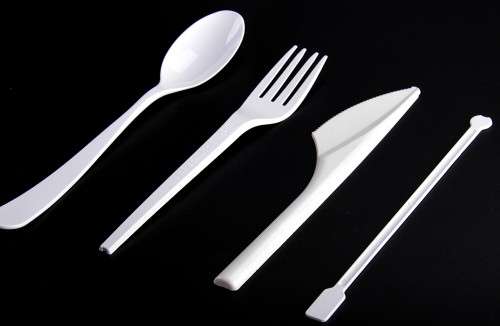


Related Products
The Others of Compostable plastic
🌐 Why Choose us as Your PHA Supplier?
- 💼 B2B Focus: We work exclusively with large-scale importers, wholesalers, and manufacturers
- 🌏 Global Export: Serving clients across North America, Europe, Asia & Oceania
- 🏭 High Purity & Consistent Supply: Industrial-scale fermentation & in-house QA
- 📦 MOQ: 25kg (custom bulk packaging available)
- 🚚 Worldwide Shipping: With supporting documents including COA, MSDS, and flow chart
⚙️ Customizable Grades for Industry-Specific Use
We offer Polyhydroxyalkanoates (PHA) with adjustable mechanical and thermal properties depending on your processing needs:
- Injection molding
- Extrusion
- Film blowing
- Coating & lamination
- 3D printing applications
📬 Contact Us for Bulk Orders & Samples
Looking for a long-term supplier of biodegradable, bio-based Polyhydroxyalkanoates (PHA)? Let’s build a greener future together.
Contact us
Let us take care of your new project
Everyday from
8:00 – 6:00
call to ask a question
+86 19591574998
Get in Touch
Right Now