Powerful Role of Sodium Glucoheptonate in Enhancing Cement
Cement is one of the most crucial materials in construction, and its properties determine the durability and strength of buildings and infrastructure. To improve the performance of cement, various additives are used, and one such important compound is Sodium Glucoheptonate. This multifunctional ingredient plays a vital role in enhancing the overall performance of cement, making it more efficient and durable. In this article, we will explore the powerful role of Sodium Glucoheptonate in cement applications and how it benefits the construction industry.
What is Sodium Glucoheptonate?
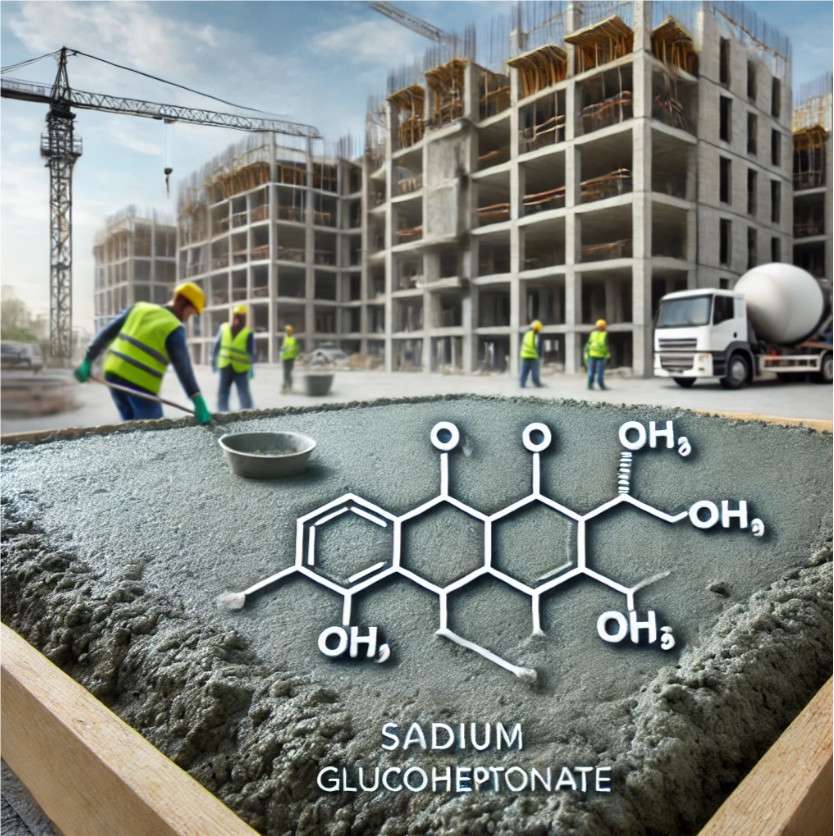
Sodium Glucoheptonate is a chelating agent derived from glucose. Its ability to form stable complexes with metal ions makes it widely useful in various industrial applications, including the cement industry. It is known for its non-toxic, biodegradable nature, making it an environmentally friendly option compared to other chemical additives.
In the cement industry, Sodium Glucoheptonate serves as a dispersing agent and water-reducing agent, playing a significant role in improving the properties of both fresh and hardened concrete. By incorporating this additive into cement, the overall workability, durability, and strength of the cement mix can be significantly enhanced.

Function of Sodium Glucoheptonate in Cement
The role of Sodium Glucoheptonate in cement is multi-faceted, offering a range of benefits that improve the performance of cement and concrete mixes:
1. Improved Workability and Flowability
One of the key benefits of Sodium Glucoheptonate is its ability to improve the workability of cement. By acting as a dispersing agent, it helps prevent the agglomeration of cement particles. This ensures a more uniform mix, making it easier to work with during application. Enhanced flowability also leads to better placement and compaction, which are crucial for ensuring the strength and durability of the final product.
2.Water Reduction
Sodium Glucoheptonate acts as a water-reducing agent, allowing the cement mix to achieve the same level of workability with less water. Reducing the water-cement ratio improves the overall strength of the concrete, making it more resistant to cracking and environmental stressors. This water reduction also contributes to faster curing times, which is beneficial for construction projects on tight deadlines.
3.Enhanced Cement Strength
By improving the dispersion of cement particles and reducing water content, Sodium Glucoheptonate plays a critical role in increasing the final strength of the cement. Stronger cement leads to more durable structures that can withstand higher loads and environmental pressures, contributing to longer-lasting buildings and infrastructure.
4.Setting Time Control
Sodium Glucoheptonate also functions as a retarder, delaying the initial setting time of cement. This is particularly beneficial in hot climates where cement can set too quickly, leading to poor workability and weaker structures. By controlling the setting time, this additive ensures that the cement mix remains workable for longer, allowing for better shaping and finishing of the concrete.
5.Prevention of Efflorescence
Efflorescence, the white crystalline deposit that appears on the surface of concrete, is a common issue in cement applications. Sodium Glucoheptonate helps mitigate this problem by reducing the movement of soluble salts to the surface. This not only improves the aesthetic appearance of the concrete but also enhances its durability by minimizing the effects of salt-induced corrosion.
Sodium Glucoheptonate: A Key Ingredient in Modern Cement
The benefits of Sodium Glucoheptonate in cement make it an essential ingredient in modern construction. Whether it’s improving the flowability of the cement mix, enhancing its strength, or controlling setting times, this additive plays a critical role in optimizing cement performance. Additionally, its environmentally friendly properties align with the increasing demand for sustainable construction materials.
By incorporating Sodium Glucoheptonate into cement formulations, construction professionals can achieve higher efficiency, better durability, and greater control over their building processes. This translates into longer-lasting structures that require less maintenance, ultimately reducing the environmental impact of construction projects.

Conclusion
The powerful role of Sodium Glucoheptonate in cement cannot be understated. Its ability to improve workability, reduce water content, enhance strength, and control setting times makes it an invaluable additive in the cement industry. As construction projects continue to evolve and demand higher performance from building materials, Sodium Glucoheptonate is set to play an even more prominent role in ensuring the durability and sustainability of future structures.
In summary, Sodium Glucoheptonate is a key ingredient that enhances the overall quality of cement, contributing to stronger, more durable, and environmentally friendly construction projects. Its versatile functions make it a critical tool for construction professionals looking to optimize their materials and achieve long-lasting results.