

Call to ask any question
+86 19591574998
WIT INDUSTRIES Services
Polylactide (PLA) Resin Supplier for Sustainable Packaging
Polylactide (PLA), also known as polylactic acid, is a bio-based thermoplastic resin used in sustainable packaging, compostable films, textiles and 3D printing. WaycooChem supplies PLA resin in 9 grades (WIT 101 to WIT 303) for manufacturers developing sustainable and compostable products, with a focus on packaging, film and nonwoven applications. Free samples, TDS, SDS and COA available for qualified B2B buyers.
Buy Polylactide (PLA) Resin in Bulk | Supplier for Compostable Film, Textiles & 3D Printing
Need Polylactide (PLA) resin for sustainable packaging, compostable film or 3D printing filament production?
Polylactide (PLA), also known as polylactic acid, is a bio-based thermoplastic polyester derived from renewable feedstocks such as corn starch, sugarcane and cassava. We supply 9 PLA grades (WIT 101 – WIT 303) covering injection molding, blown film, cast film, fiber spinning, melt blown nonwoven and 3D printing applications. As a Polylactide (PLA) resin manufacturer and supplier in China, we support global manufacturers developing compostable packaging, biodegradable bubble film, PLA fiber and 3D printing filament.
Product Description
What Is Polylactide (PLA)?
Polylactide (PLA), also known as polylactic acid, is a bio-based thermoplastic polyester produced from lactic acid derived from renewable feedstocks such as corn, sugarcane and cassava. PLA combines processability, stiffness and transparency with the potential for industrial compostability under appropriate conditions, making it useful for sustainable packaging, film, textiles and additive manufacturing.
PLA is available in multiple grades that differ in MFR, L-isomer content, melting point and mechanical properties. This allows formulators to select the right grade for their specific process — whether injection molding, blown film, cast film, fiber spinning, melt blown nonwoven or 3D printing filament extrusion.
Polylactide (PLA) Resin Specifications — 9 Available Grades
| Property | WIT 101 | WIT 102 | WIT 103 | WIT 201 | WIT 202 | WIT 203 | WIT 301 | WIT 302 | WIT 303 |
|---|---|---|---|---|---|---|---|---|---|
| Density (g/cm³) | 1.24 | 1.24 | 1.24 | 1.24 | 1.24 | 1.24 | 1.24 | 1.24 | 1.24 |
| MFR (g/10min) | 3 | 3 | 3 | 10 | 10 | 10 | 35 | 35 | 35 |
| Optical Purity (% L-isomer) | >99% | 98% | 96% | >99% | 98% | 96% | >99% | 98% | 96% |
| Melting Point (°C) | 170–180 | 160–165 | 150–155 | 170–180 | 160–165 | 150–155 | 170–180 | 160–165 | 150–155 |
| Glass Transition (°C) | 55–65 | 55–65 | 55–65 | 55–65 | 55–65 | 55–65 | 55–65 | 55–65 | 55–65 |
| Tensile Modulus (MPa) | 3500 | 3500 | 3500 | 3500 | 3500 | 3500 | 3500 | 3500 | 3500 |
| Tensile Strength (MPa) | ≥50 | ≥50 | ≥45 | ≥50 | ≥50 | ≥45 | ≥50 | ≥50 | ≥45 |
| Fracture Elongation (%) | ≥3 | ≥3 | ≥3 | ≥3 | ≥3 | ≥3 | ≥3 | ≥3 | ≥3 |
| Charpy Impact (kJ/m²) | ≥2 | ≥2 | ≥2 | ≥1 | ≥1 | ≥1 | ≥1 | ≥1 | ≥1 |
| HDT (°C, amorphous) | 50–60 | 50–60 | 50–60 | 50–60 | 50–60 | 50–60 | 50–60 | 50–60 | 50–60 |
| Application | Heat-resistant straws, heat-resistant blister, blow bottle, 3D printing, spinning | 3D printing, blown film, sheet, staple fiber, double drawn film | Blowing film, casting film, sheet, staple fiber, 3D printing, compostable tableware | Filament, staple fiber, blister, injection molding | Staple fiber, spunbonded nonwoven, blister, injection molding | Staple fiber, spunbonded nonwoven, blister, injection molding | Injection molding, thin-wall injection (heat-resistant), melt blown nonwoven | Injection molding, thin-wall injection (non-heat-resistant), melt blown nonwoven | Melt blown nonwoven fabric |
MFR tested at 190°C / 2.16 kg. Grades can be customized for specific extrusion, injection or spinning requirements.
Product properties
Bio-Based Feedstock
PLA is produced from renewable feedstocks such as corn starch, sugarcane and cassava, reducing reliance on petroleum-based raw materials.
Compostability and End-of-Life
PLA can be compostable under appropriate industrial composting conditions, depending on the PLA grade, product formulation, article thickness, processing conditions and applicable certification requirements. Compostability should therefore be evaluated against the intended application and relevant standards (e.g., EN 13432, ASTM D6400) rather than treated as universal degradation in natural environments.
Thermoplastic Processability
PLA is a thermoplastic polyester that can be processed by injection molding, blow molding, thermoforming, film extrusion and fiber spinning using equipment commonly used for conventional plastics.
Physical Properties
PLA offers good stiffness, transparency and dimensional stability. Density is approximately 1.24 g/cm³, melting point 150–180°C depending on grade, and glass transition temperature 55–65°C.
Hygroscopicity
PLA is moderately hygroscopic and should be dried before processing. Recommended moisture content for extrusion is typically below 0.025%.
Specialty Application
Polylactide (PLA) Resin for Biodegradable & Compostable Bubble Film
Can PLA be used for bubble film? Yes. Our WIT 102 and WIT 103 grades (MFR 3 g/10min) are specifically developed for blown film and casting film applications, making them suitable for biodegradable and compostable bubble film, bubble wrap and protective packaging. Formulators can blend these grades with PBAT or other biodegradable polyesters to balance stiffness, flexibility, melt strength and film clarity.
For bubble film applications, the key parameters to confirm are MFR, melt strength, elongation, tensile strength, film clarity and compatibility with your existing extrusion equipment. If you are developing a compostable bubble wrap formulation, contact us with your target film thickness, bubble size and required compostability certification (e.g., EN 13432, ASTM D6400) — we will recommend the appropriate PLA grade and blending ratio.
Recommended grades for bubble film: WIT 102 (MFR 3, blown film / double drawn film), WIT 103 (MFR 3, blowing film / casting film). Both grades can be blended with PBAT, PPC or other compostable polyesters to adjust flexibility and toughness.
Main Applications
Applications of Polylactide (PLA)
1. Sustainable Packaging & Compostable Film
PLA is widely used for compostable packaging film, bubble film, bubble wrap, food containers, bags and flexible packaging. Its ability to break down in industrial composting environments makes it a preferred choice for brands seeking to reduce reliance on conventional petroleum-based plastics. Recommended grades: WIT 102, WIT 103.
2. PLA Fiber, Yarn & Nonwoven
Polylactide (PLA) fiber, yarn and filament are used in textiles and nonwoven applications including spunbonded nonwoven, melt blown nonwoven, staple fiber and filament. PLA textiles offer performance similar to conventional polyester fibers while being industrially compostable in suitable formulations. Recommended grades: WIT 201, WIT 202, WIT 203, WIT 303.
3. PLA Resin for 3D Printing Filament Production
We supply PLA resin pellets for 3D printing filament extrusion. Our grades offer consistent MFR and molecular weight for smooth extrusion and reliable print quality. Recommended grades: WIT 101, WIT 102,WIT 103.
4. Injection Molding & Thin-Wall Products
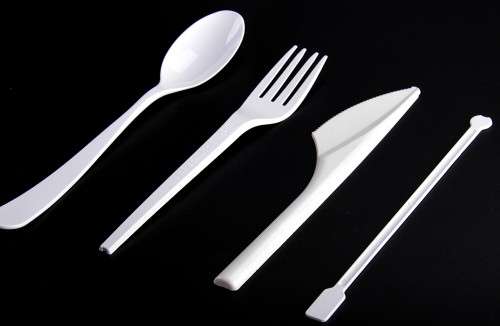
PLA injection molding grades are used for heat-resistant straws, thin-wall tableware, blister packaging and disposable food service items. Recommended grades: WIT 301, WIT 302 (thin-wall injection), WIT 101 (heat-resistant).






Why Source Polylactide (PLA) from WaycooChem?
Application-Focused PLA Supply
We supply PLA resin for packaging, film, textiles, nonwoven and 3D printing applications. Our grades are selected to match specific processing methods and end-use requirements.
9 Available Grades (WIT 101 – WIT 303)
From low-MFR film grades to high-MFR injection grades, our PLA portfolio covers a wide range of applications with consistent batch-to-batch quality.
Bulk B2B Supply
25 kg bags and 1000 kg jumbo bags for commercial production. Flexible order quantities for trial, pilot and full-scale production.
Application Matching & Technical Support
We help buyers evaluate PLA specifications according to processing method and end-use requirements — including MFR, L-isomer content, melting point and blending compatibility with PBAT or other compostable polyesters.
Technical Documentation
TDS, SDS and batch-specific COA available with every shipment. For food-contact or specific regulatory requirements, please specify before ordering.
Sample Support & Global Shipping
Samples can be arranged for formulation and production trials. Bulk orders can be arranged for international manufacturers, distributors and industrial users.
What Should Buyers Check When Sourcing PLA Resin?
Before ordering bulk PLA resin, B2B buyers should confirm the following with any supplier:
- What PLA grade is suitable for your processing method — blown film, cast film, injection molding, fiber spinning or 3D printing?
- What MFR range do you need? Confirm MFR is tested at 190°C / 2.16 kg and is consistent batch-to-batch.
- Can the PLA be blended with PBAT, PPC or other compostable polyesters for your target film or bubble wrap formulation?
- What is the L-isomer content? Higher L-isomer gives higher melting point and stiffness.
- Is TDS, SDS and batch-specific COA available for every shipment?
- What packaging sizes are available? 25 kg bags for trials, 1000 kg jumbo bags for production.
- Can you supply samples for formulation trials before bulk ordering?
- Can PLA specifications be customized (MFR, L-isomer, additives) for your specific application?
Frequently Asked Questions (FAQ)
Q1: What is Polylactide (PLA)?
A1: Polylactide (PLA), also known as polylactic acid, is a bio-based, biodegradable thermoplastic polyester produced from renewable feedstocks such as corn starch, sugarcane or cassava. It is used in sustainable packaging, compostable film, textiles, nonwoven fabric, 3D printing and injection-molded disposables.
Q2: Is Polylactide the same as Polylactic Acid?
A2: Yes. “Polylactide” and “polylactic acid” refer to the same polymer. “Polylactide” is the more technically accurate term for the polymerized form, while “polylactic acid” is the more common commercial term. Both refer to PLA.
Q3: What is the CAS number of PLA?
A3: The CAS number for Polylactide (PLA) is 26100-51-6. Different stereochemical forms (PLLA, PDLLA, PDLA) may have different CAS numbers. Please confirm the specific grade with our sales team before ordering if your application requires a specific regulatory reference.
Q4: Is PLA suitable for sustainable packaging?
A4: Yes. PLA is widely used for sustainable packaging including compostable film, bubble film, bubble wrap, food containers and flexible packaging. Compostability depends on grade, article thickness and the applicable certification (e.g., EN 13432, ASTM D6400).
Q5: Can PLA be used to make compostable bubble film?
A5: Yes. Our WIT 102 and WIT 103 grades (MFR 3 g/10min) are suitable for blown film and casting film applications including compostable bubble film and bubble wrap. PLA is often blended with PBAT or other biodegradable polyesters to balance stiffness, flexibility and melt strength.
Q6: What PLA grade is suitable for film extrusion?
A6: For blown film and cast film, WIT 102 and WIT 103 with MFR around 3 g/10min are recommended. Final grade selection should consider film thickness, bubble stability, target mechanical properties and blending requirements.
Q7: Can PLA be blended with PBAT for compostable film?
A7: Yes. PLA is commonly blended with PBAT to improve flexibility, toughness and tear resistance while maintaining compostability. Typical PLA/PBAT ratios depend on the target application, film thickness and required mechanical properties.
Q8: Is PLA industrially compostable?
A8: PLA can be compostable under appropriate industrial composting conditions, depending on grade, article thickness and certification. It does not degrade quickly in natural environments or home compost. Buyers should confirm the applicable standard (EN 13432, ASTM D6400) for their target market.
Q9: What is the MFR range of your PLA resin?
A9: Our 9 grades cover MFR from 3 to 35 g/10min (tested at 190°C / 2.16 kg). WIT 101–103: MFR 3 (film, 3D printing, heat-resistant). WIT 201–203: MFR 10 (fiber, nonwoven, injection). WIT 301–303: MFR 35 (thin-wall injection, melt blown nonwoven).
Q10: Can I buy PLA resin in bulk?
A10: Yes. We supply PLA resin in bulk to manufacturers and distributors worldwide. Standard packaging is 25 kg bags and 1000 kg jumbo bags. MOQ depends on grade and destination — send us your application details and target port for a quotation.
Q11: What packaging options are available?
A11: Standard packaging is 25 kg woven bags with PE inner liners, and 1000 kg jumbo bags for bulk orders. Custom packaging and OEM labeling are available for qualified buyers.
Q12: Can you provide samples, TDS and COA?
A12: Yes. Free samples are available for qualified B2B buyers. TDS (Technical Data Sheet), SDS (Safety Data Sheet) and batch-specific COA (Certificate of Analysis) are provided with every shipment.
Contact us
Request a Bulk Quote for Polylactic Acid (PLA) Today!
Everyday from
8:00 – 6:00
call to ask a question
+86 19591574998
Get in Touch
Right Now